
Astroturf: The Ultimate Guide to Artificial Grass for Every Surface
When people search for “astroturf”, they’re often looking for more than just a product — they want to understand what it is, how it works, where it’s used, and whether it’s the right choice for their space. In this complete guide, you’ll discover everything about Astroturf® and artificial grass — from its origin and benefits to installation tips and cost comparison.
What Is Astroturf?
Astroturf is a brand name that has become synonymous with artificial grass — a synthetic surface made to look and feel like natural grass. It was originally developed as a durable alternative to natural grass for sports stadiums but has now become widely used in residential landscapes, commercial properties, playgrounds, and even indoor areas.
Unlike real grass that requires watering, mowing, and sunlight, astroturf provides a consistently green surface year-round with minimal maintenance.
The Origins and History of Astroturf
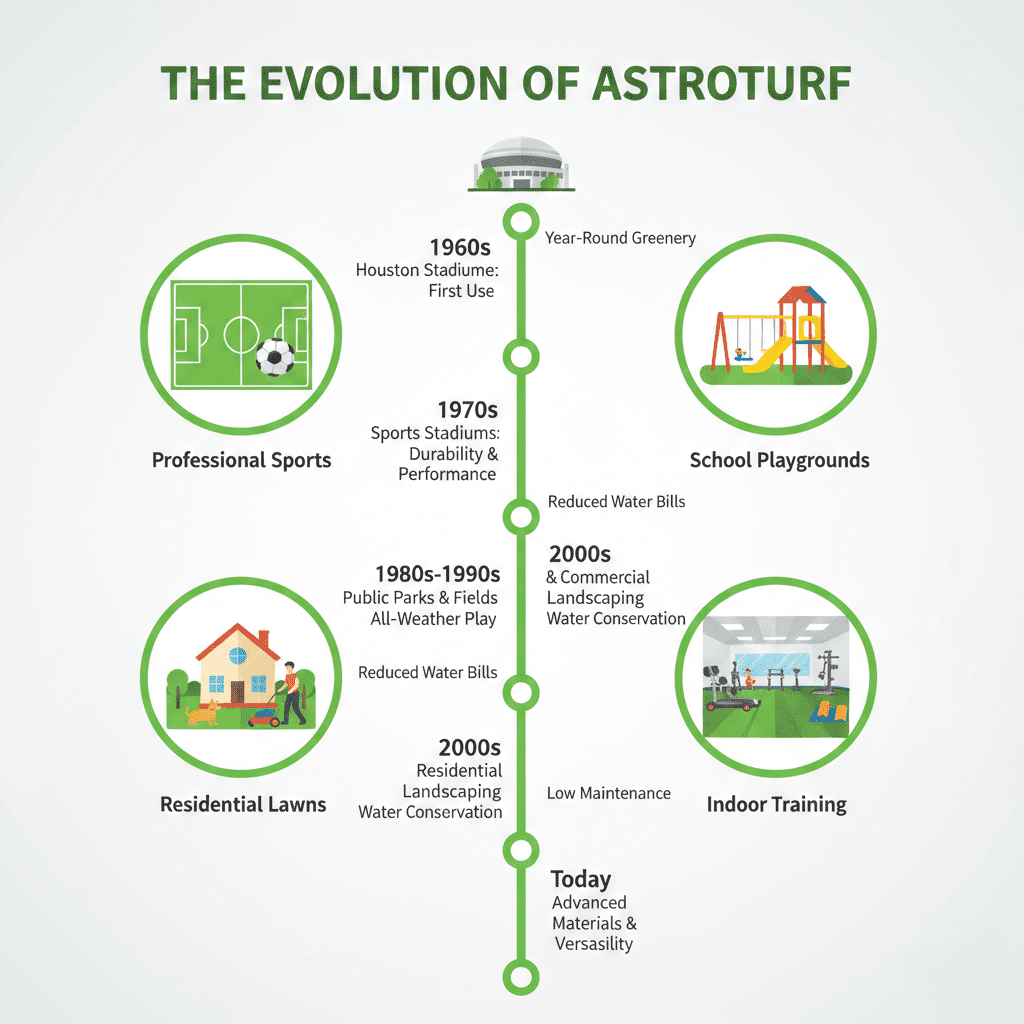
The concept of artificial grass dates back to the 1960s. The first commercial artificial turf was introduced as “AstroTurf” at the Houston Astrodome — the world’s first domed major league baseball stadium. Because the indoor stadium lacked sufficient sunlight to grow natural grass, a synthetic solution was needed.
The technology quickly evolved:
1. 1966: First installation in the Houston Astrodome.
2. Through the 1970s and 1980s: Rapid adoption by major sports leagues.
3. 1990s onwards: Improved fiber technologies made astroturf softer and more natural-looking.
Today, artificial grass has come a long way from its early indoor sports origins — offering lifelike blades, better drainage, and high durability.
Astroturf vs Natural Grass
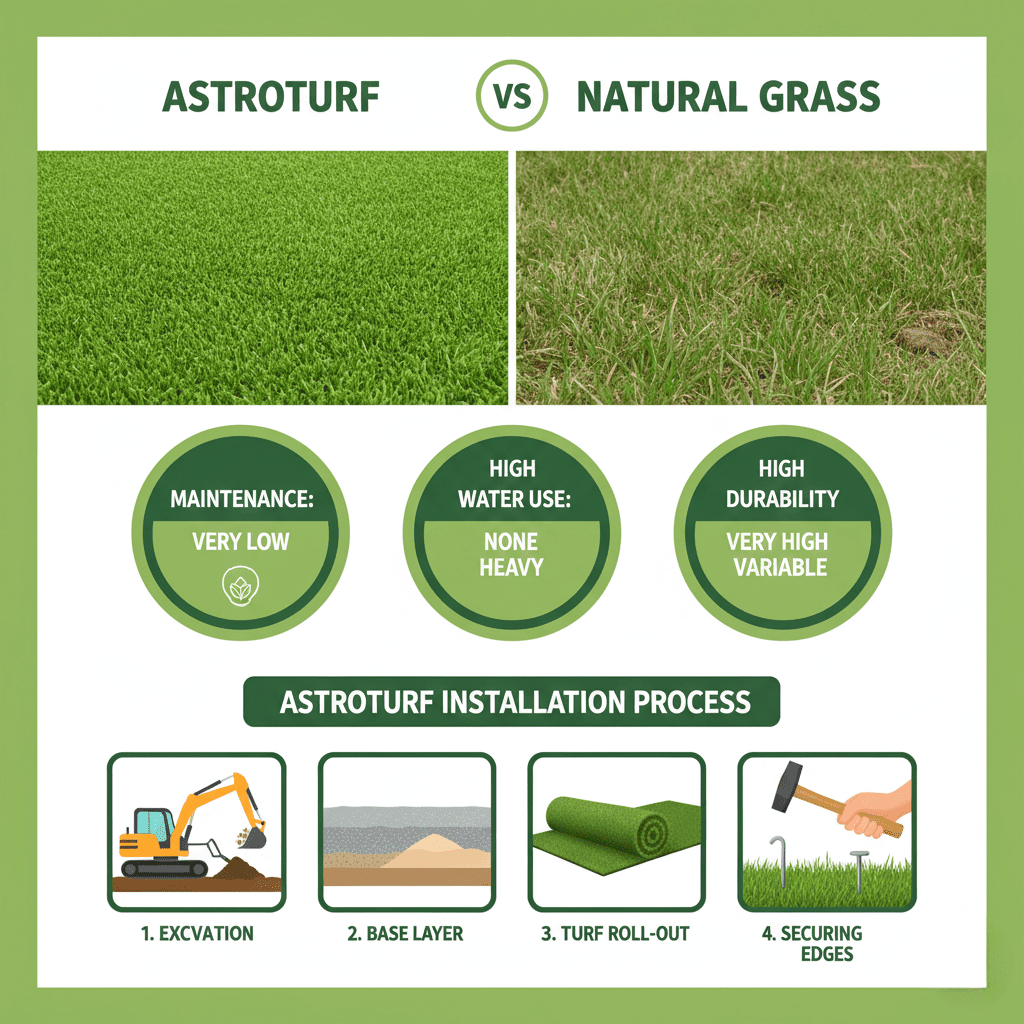
| Feature | Astroturf | Natural Grass |
|---|---|---|
| Maintenance | Very low | High |
| Water Use | None | Heavy |
| Durability | Very high | Can wear, patch |
| Appearance | Always green | Depends on season |
| Cost Over Time | Lower | High (ongoing care) |
| Pets & Children Friendly | Yes (non-toxic) | Yes |
Why Choose Astroturf?
- Year-Round Greenery: Always lush and vibrant.
- Low Maintenance: No mowing, fertilizing, or watering.
- Durability: Withstands heavy foot traffic.
- Cost-Effective in the Long Run: Saves on water and maintenance costs.
- Safe for Kids & Pets: Non-allergenic surfaces with good drainage.
Where Is Astroturf Used?
Astroturf isn’t just for sports anymore. Its uses have expanded greatly:
1. Sports Fields
Originally designed for sports such as:
- Football
- Soccer
- Baseball
- Tennis
- Hockey
Astroturf provides consistent performance and absorbs impact well — making it ideal for competitive play.
2. Residential Lawns
Homeowners use artificial grass to:
- Replace brown patches or difficult grass areas
- Create pet-friendly lawns
- Install rooftop gardens or patios
3. Commercial Properties
Office parks, shopping centers, and hotels use astroturf to:
- Enhance curb appeal
- Create comfortable outdoor spaces
- Reduce landscaping maintenance costs
4. Playgrounds & Schools
Artificial grass is:
- Soft and safe for children
- Easy to clean
- Excellent under playground equipment
5. Indoor Spaces
Astroturf carpets can add natural aesthetics to:
- Gyms
- Showrooms
- Interior design elements
Types of Astroturf / Artificial Grass
Artificial grass comes in various configurations depending on:
- Pile height — how tall each blade is
- Density — how many fibers per square inch
- Material — polyethylene, polypropylene, or nylon
Common Types
1. Short Pile Turf (10–20 mm)
- Ideal for putting greens or small patios
- Low profile, minimal infill needed
2. Medium Pile Turf (20–30 mm)
- Best choice for residential lawns
- Natural look with good bounce
3. Long Pile Turf (30–40+ mm)
- Lushest appearance
- Great for high-end landscapes
4. Sports-Grade Turf
- Extra dense and robust
- Designed for heavy athletic use
How Astroturf Is Installed
Installation varies depending on area size and surface type.
Step-by-Step
- Measure the Area
- Calculate the square footage to determine how much turf you need.
- Calculate the square footage to determine how much turf you need.
- Excavation
- Remove the existing grass or surface.
- Level the ground for a smooth base.
- Remove the existing grass or surface.
- Add a Base Layer
- Lay crushed stone or gravel.
- Compact to make a firm foundation.
- Lay crushed stone or gravel.
- Install Weed Barrier
- Prevents weeds from growing through the turf.
- Prevents weeds from growing through the turf.
- Roll Out the Turf
- Lay the astroturf over the prepared base.
- Make sure seams are aligned.
- Lay the astroturf over the prepared base.
- Secure Edges
- Use landscape staples or adhesive.
- Use landscape staples or adhesive.
- Add Infill (Optional)
- Materials like sand or rubber can help the turf stand upright.
- Enhances cushioning and durability.
- Materials like sand or rubber can help the turf stand upright.
Maintenance Tips for Long-Lasting Astroturf
One of the biggest selling points of artificial grass is low maintenance — but regular care still extends its life and keeps it looking great.
Routine Maintenance
- Brush the Turf: Use a stiff broom to keep blades standing up.
- Rinse Occasionally: With water to remove dust or pollen.
- Remove Debris: Leaves, branches, or litter should be cleared.
- Pet Cleanup: Remove solids, rinse area, and use pet-friendly turf cleaners.
- Clean Spills Promptly: Most stains can be rinsed off quickly.
Avoid
Heavy furniture that may crush fibers over time
Harsh chemical cleaners
Open flames or fireworks on the turf
Environmental Impact
Many people assume artificial grass is bad for the environment — but that’s partly a myth.
Pros
- Water Conservation: No watering reduces significant water waste.
- No Pesticides or Fertilizers: Good for eco-sensitive areas.
- Recyclable Materials: Some sellers use eco-friendly materials.
Cons
- Heat Retention: Can get hot in direct sunlight — but modern infills reduce heat buildup.
- End-of-Life Disposal: Recycling programs are improving but still limited.
Overall, for water conservation and low chemical use, artificial grass is often considered more sustainable — especially in drought-prone regions.
Cost of Astroturf (What to Expect)
The cost depends on:
- Quality of turf
- Pile height
- Installation complexity
- Geographic location
Typical Price Range
| Component | Estimated Cost |
| Low-grade turf | $3–$6 / sq ft |
| Mid-range turf | $7–$12 / sq ft |
| High-end turf | $13–$20+ / sq ft |
| Professional installation | $5–$10 / sq ft |
Factors like drainage systems, weed barriers, or complex landscaping will increase prices.
Comparing Artificial Grass Brands
While “Astroturf” is the most recognized name, there are many competitors offering excellent products:
- Long lasting polyethylene fibers
- UV protection
- Pet-friendly options
- Various textures and colors
When selecting turf:
- Look for UV stability
- Check pile height and density
- Ask for warranty details (5–15+ years)
Review customer testimonials
Is Astroturf Worth It? Pros & Cons
Benefits
✔ Always green and clean
✔ Saves time and money on upkeep
✔ Great for pets and kids
✔ Works in shady areas where grass won’t grow
✔ No mud or brown patches
Drawbacks
✘ Higher upfront cost than sod
✘ Can feel warm in direct sun
✘ Some products may flatten over time
Astroturf Buying Checklist
Before buying artificial grass, make sure to check:
🔹 Fiber material (polyethylene preferred)
🔹 UV resistance rating
🔹 Warranty duration
🔹 Drainage capability
🔹 Installation support
🔹 Customer reviews
Frequently Asked Questions (FAQs)
Conclusion
Astroturf has evolved from a sports field solution into a premium landscaping and lifestyle surface used around the world. Whether you want a lush lawn, a safe playground, a maintenance-free garden, or a commercial landscape boost, artificial grass offers unmatched benefits:
✔ No mowing
✔ No watering
✔ Always green
✔ Great for pets & kids
✔ Customizable to any space
With proper installation and minimal upkeep, astroturf delivers long-term beauty and value that natural grass simply cannot match in many environments.